

More Road Ahead: Expanding Alberta’s Hydrogen Refuelling Network
A whole lot more road is opening up for hydrogen in Alberta.
With Azolla Hydrogen refuelling infrastructure already operating in Edmonton and our next station being deployed in Calgary, we’re taking an important step toward a more connected hydrogen refuelling network across the province.
The Calgary station builds on what we’ve already proven through real-world operations in Edmonton. But this expansion is about more than adding a second station. It’s about creating the connections that can help move hydrogen beyond individual pilots and into broader commercial adoption.
What does the Calgary station unlock?
The impact goes well beyond adding another point on the map.
Once operational, the Calgary station will:
Bring a first-of-its-kind hydrogen refuelling station to Calgary for private fleet use.
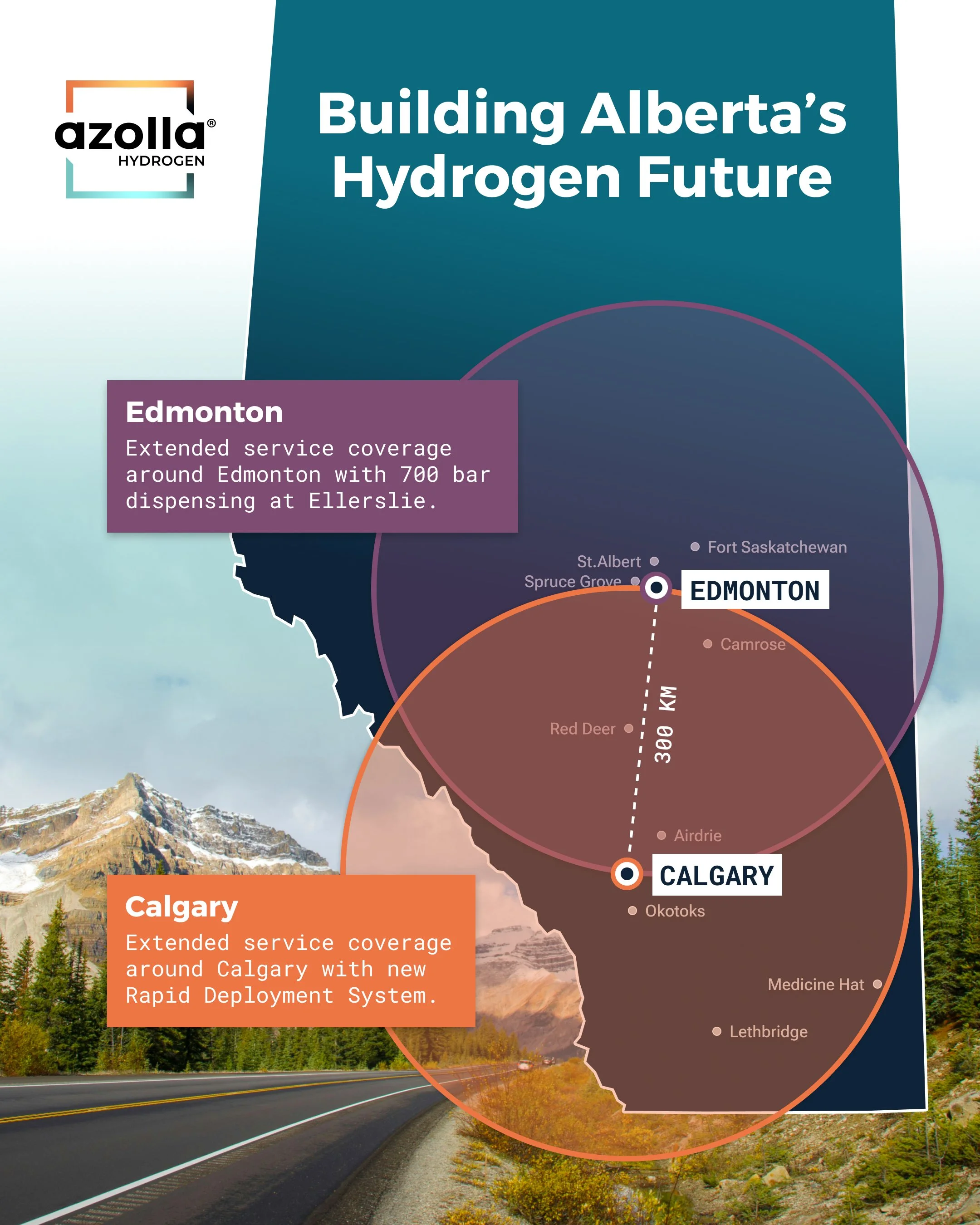
Extend hydrogen vehicle service coverage to approximately a 300 km radius around both Edmonton and Calgary.
Increase effective hydrogen mobility service coverage from approximately 11% to 42% of Alberta’s total land area.
Connect Alberta’s two largest cities as key points in a growing hydrogen refuelling network.
For fleets, that means more road they can confidently cover, greater flexibility when planning hydrogen vehicle deployments and more opportunities to put hydrogen vehicles into real-world operation.
But the opportunity extends beyond transportation. A larger, more connected network can support greater hydrogen demand, strengthen the case for new deployments and give industry more confidence to invest in what comes next.
From individual stations to a connected network
Hydrogen vehicles need more than technology that works. Fleets need confidence that fuel will be available where they need it and that the infrastructure can support their operations as they grow.
Instead of individual points of hydrogen infrastructure, we’re building a network that connects production, refuelling, fleets and demand across a much larger service area.
Every new connection gives fleets more options and creates more opportunities to put hydrogen to work.