Our Technology
Ready to Fuel
your Fleet

Biodrome
Technology
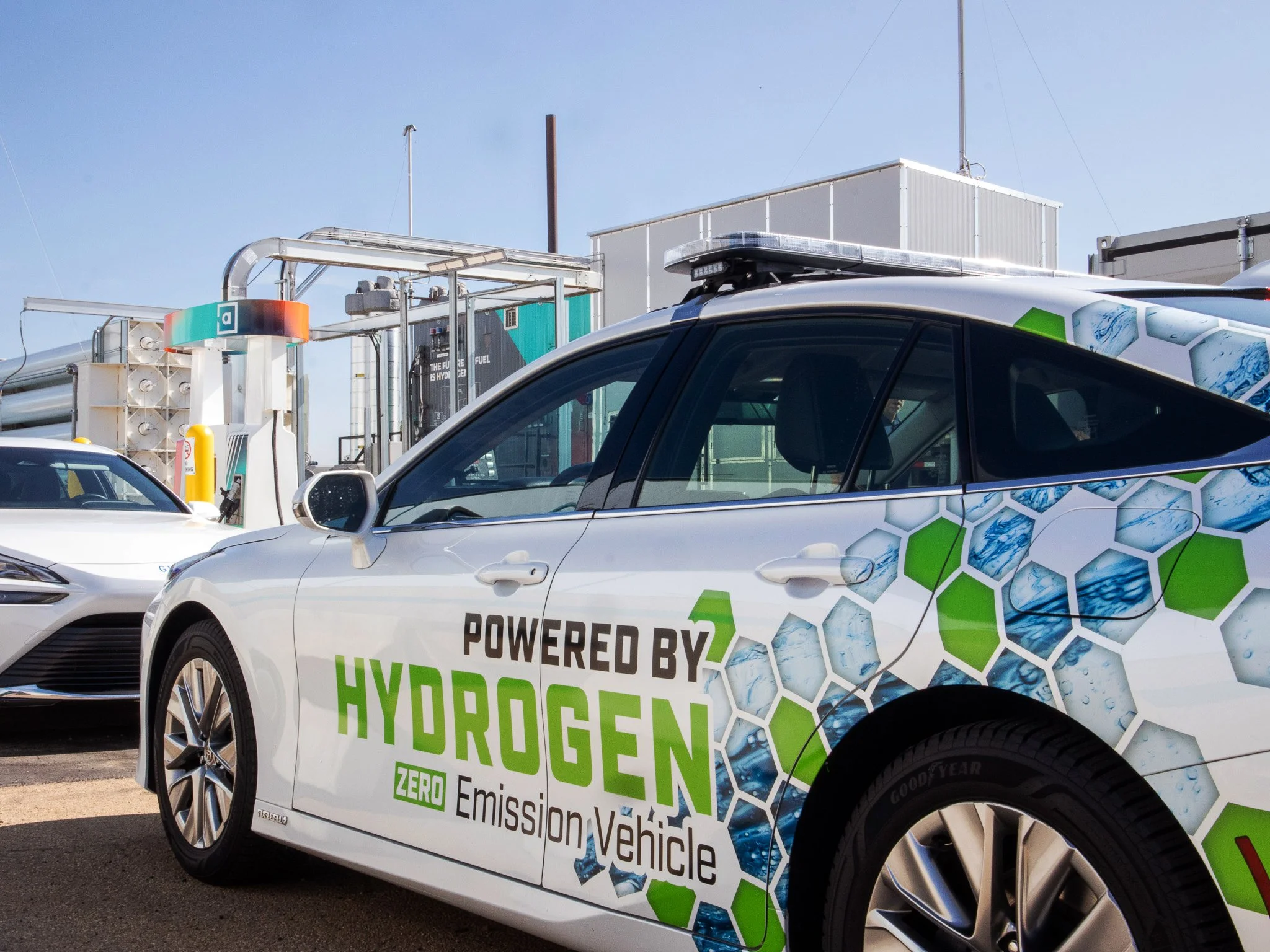
The Biodrome generates fuel cell spec hydrogen onsite through catalytic reformation of methanol and de-ionized water — engineered to operate at the fuelling station itself, not at a centralized facility hundreds of kilometres away.
That's the core of what makes Biodrome different: by decentralizing production, we eliminate the need for the expensive, high-pressure transport infrastructure that conventional hydrogen supply chains depend on. Hydrogen is made where it's used, full stop.
Modular &
Scalable Design
Hydrogen demand rarely arrives at a fixed size — a single-route pilot today might be a full fleet conversion in three years. Biodrome units are available in 225, 450, and 900 kg/day configurations, so production capacity can grow in step with your operation instead of forcing an early, oversized investment or a costly mid-program upgrade.
225Kg/H2
450Kg/H2
900Kg/H2
All Hydrogen,
All The Time
24/7
Demand shifts, and your fuel supply needs to shift with it. Biodrome units run 24/7 production paired with excess storage capacity, so you can respond to changes in demand without a delay.
Every unit is remotely monitored around the clock - performance tracked continuously, issues flagged before they become downtime. You're not checking in on your hydrogen supply. We are.
Remote hydrogen generation

Our Biodrome Technology uses a blend of methanol and deionized water to generate fuel-cell spec hydrogen.
The Biodrome performs catalytic reformation of a methanol/water blend to produce low GHG hydrogen on-site where it is needed
Currently-available methanol results in full lifecycle GHG reductions of >40% as compared to diesel and >69% as compared to gasoline. There are GHG reductions of >21% as compared to grey hydrogen.
The pathway to ZERO emissions uses negative carbon intensity feedstocks, such as renewable natural gas (RNG)
Since methanol is the feed stock, the fueling stations can readily provide fuel to both hydrogen-powered and methanol-powered vehicles.
Biodrome hydrogen generation can supply hydrogen to its own dispensing equipment and to “neighborhood” fueling stations, reducing the reliance on imported hydrogen from non-local suppliers.
Methanol is more easily transported, stored and handled than high pressure hydrogen or ammonia.
Why Methanol?
1
Hydrogen from methanol has been shown to reduce GHG emissions by greater than 69% compared to gasoline, 45% compared to diesel, and 25% compared to conventional hydrogen sources.
2
Methanol is readily transported today without the need for high-pressure hydrogen tube trailers. This improves transportation efficiency, reduces GHG from transportation and shifts to methanol as the hydrogen carrier: a readily available, widely transported fuel.
3
Hydrogen generated on-site reduces reliance on off-site hydrogen suppliers, network outages, and other supply problems. This encourages adoption greatly, offering companies a solution today that makes significant impact in reducing their carbon footprint.
Diesel vs. Hydrogen
Our Biodrome Technology and methanol supply chain services reduce GHG emissions by 44% - 70%. Our fuel cell technology produces zero hydrocarbons that impact air quality (such as unburnt fuel, particulates, carbon monoxide etc.), and zero NOx and zero SOx.
The following chart (fig. 1) compares Azolla Hydrogen to the industry baseline (diesel). Our emissions are only 55% of the baseline emissions, saving a minimum 45% emissions, while providing the same level of service (both fleets travel a total distance of 1.46 million kms).